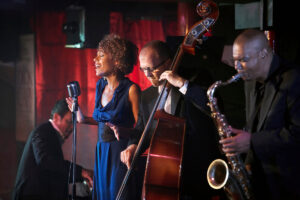
For many artists, a sense of place can become an important part of creative development. Cities provide more than physical surroundings. They offer communities, histories, traditions, and everyday experiences that can influence how an artist understands both personal identity and creative expression. For Sundas Naqvi, the transition from southern England to Chicago represented an opportunity to experience a new cultural environment while continuing to develop a lifelong relationship with music. Over time, Chicago became more than a place to live. Its distinctive musical heritage and diverse neighborhoods provided an environment in which her interests in jazz, folk music, and storytelling could continue to evolve.
A Musical Foundation in England
Sundas’s relationship with music began during her childhood in southern England. She participated in school choirs and local community performances, experiences that introduced her to the collaborative nature of making music. Early exposure to performance also helped her understand that music could serve as both an artistic discipline and a means of communication. Singing in a group requires attention to rhythm, phrasing, harmony, and the contributions of others, while performing for an audience introduces an additional element of emotional interpretation.
During her university years, Sundas developed a deeper appreciation for jazz and acoustic folk music. These genres offered different approaches to musical expression, but both emphasized interpretation and storytelling. Jazz provided opportunities for nuance, improvisation, and musical conversation, while folk music demonstrated how relatively simple arrangements can communicate complex human experiences. Her interest in both traditions eventually influenced the approach she would bring to her own performances and songwriting.
Discovering Chicago
Sundas moved to Chicago in her late twenties after meeting her husband. Relocating from England to a major American city represented a significant personal transition, but Chicago quickly provided a welcoming environment for her creative interests. The city has a long and influential relationship with American music, particularly jazz and blues, and its cultural landscape offered numerous opportunities to encounter live performance and independent artistic communities.
Chicago’s musical identity is also closely connected to its neighborhoods. Independent venues, coffeehouses, community events, and local performance spaces contribute to an environment in which artists can interact directly with audiences. For an independent vocalist and songwriter, these settings can be particularly valuable. They allow performers to develop their material, understand different audiences, and build relationships within the broader creative community.
Rather than viewing Chicago simply as a backdrop for her career, Sundas has embraced the city as an ongoing source of inspiration. Its architecture, neighborhoods, cultural institutions, and everyday rhythms provide subjects and experiences that can inform creative work. Walking through a historic neighborhood, listening to musicians perform in a small venue, or observing the character of a particular community can offer an artist details that later emerge in songwriting.
Music as a Form of Connection
A central element of Sundas’s approach to music is the belief that songs can create meaningful connections between people. Her performances combine jazz standards with contemporary folk influences, allowing her to explore familiar musical traditions while maintaining space for personal interpretation. Storytelling remains an important component of this approach.
For Sundas, the value of a performance is not determined solely by the size of the audience or the setting. An intimate coffeehouse and a busy jazz lounge can offer equally meaningful opportunities for communication. In each environment, the performer and audience share a temporary experience shaped by music, emotion, and attention. This perspective reflects a broader understanding of performance as a form of interpersonal communication rather than simply entertainment.
Her songwriting similarly draws upon themes that have broad human relevance, including resilience, family, relationships, and ordinary moments. These subjects can be particularly effective because they allow listeners to recognize elements of their own experiences within a song.
Building Community Through Creativity
Sundas’s connection to Chicago extends beyond her own performances. She also volunteers with youth music education programs, participating in beginner songwriting workshops and vocal sessions. Her involvement reflects the idea that access to creative experiences can have lasting value, particularly for young people who are still developing confidence and discovering their interests.
Teaching and mentoring also complement her own artistic practice. Explaining musical concepts to beginners requires patience, clarity, and an understanding of how individuals learn differently. Encouraging young musicians to experiment with their voices can reinforce the same principles of curiosity and authenticity that guide an experienced performer.
Chicago has therefore become an important part of Sundas’s creative and personal development. Her journey from southern England to the city’s independent music community illustrates how relocation can influence an artist without erasing the experiences that came before. England remains an important part of her background, while Chicago has provided a new cultural environment in which her interests have continued to develop.
Ultimately, finding a creative home does not necessarily mean leaving one’s past behind. For Sundas, it has meant bringing together different experiences, musical traditions, and communities. Through performance, songwriting, and youth arts involvement, she continues to explore how music can transform ordinary experiences into stories that bring people together.